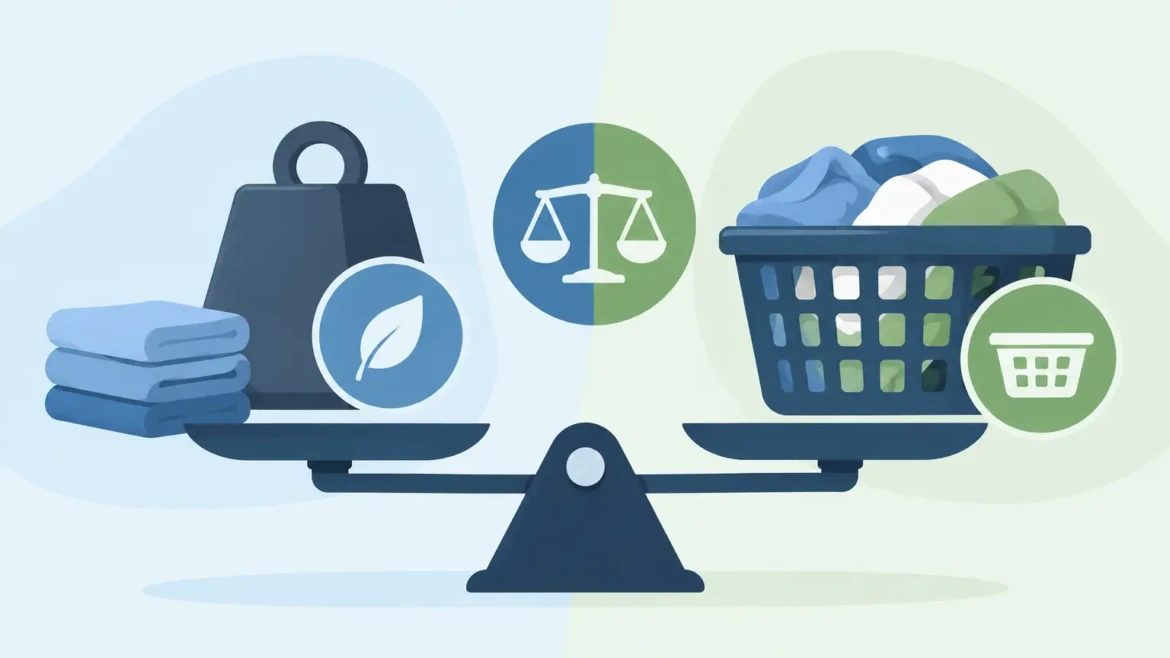
A laundry price can look simple until you try to compare it. Per pound versus per load is not just a question of which number is lower. It is really about what you are paying for: machine time, water, detergent, folding, travel, and the hours you get back in your week.
For a household in Lake Ronkonkoma, the better choice depends on the amount of laundry you have, the kind of clothes you are washing, and whether you want to do the work yourself or hand it off. Here is how to look at both options without getting buried in laundry math.
What per-load laundry pricing means
Per-load pricing is the familiar self-service laundromat model. You pay for each washer and dryer you use, usually based on machine size. A regular washer may work for a small basket of everyday clothing, while a larger machine can handle family laundry, bedding, or several loads from home at once.
This option gives you control. You choose the machine, select your wash temperature, decide how much detergent to use, and move your clothes into the dryer when the wash is done. If you already plan to be nearby and do not mind spending an hour or two at the laundromat, per-load service can be a practical fit.
The catch is that a “load” is not a standard amount. One person might fill a machine just halfway with a few outfits. Another person may pack a large washer with towels, kids’ clothes, and sheets. Both may pay the same machine price, even though one customer is getting much more laundry cleaned for the money.
Per-load pricing can be especially worthwhile when you have bulky items. Comforters, blankets, sleeping bags, and large batches of towels take up lots of space but may not weigh as much as you expect. A properly sized large-capacity washer may be more economical than paying by weight for items that are mostly volume.
How per-pound pricing works
With per-pound laundry service, your clothing is weighed and priced by its actual weight. The service typically includes washing, drying, and folding, so you can drop off a bag and return to clean, neatly folded clothes that are ready to put away.
This makes per-pound pricing easy to understand for everyday laundry. A bag of T-shirts, jeans, socks, pajamas, undergarments, and work clothes has a clear cost based on how much is in it. You are not trying to estimate whether you filled a machine efficiently enough.
At Ronkonkoma Laundromat, wash-and-fold drop-off starts at $1.25 per pound plus tax. Pickup and delivery starts at $1.75 per pound plus tax. The higher pickup-and-delivery rate reflects the added convenience of having your laundry collected and brought back to you, rather than making a trip yourself.
Per-pound service often makes the most sense for people who value time as much as the wash itself. Parents with full calendars, commuters, students, older adults, and anyone without a working washer and dryer at home may prefer knowing that laundry is handled from start to finish.
What counts toward the weight
Laundry is generally weighed when it arrives dirty. Everyday clothing can add up more quickly than many people realize, especially when jeans, hoodies, bath towels, and sweatshirts are included. A household’s weekly laundry may weigh far more than a single overflowing hamper suggests.
Weight also varies by fabric. A bag full of lightweight summer clothes may cost less than a smaller-looking bag filled with denim, heavy cotton towels, or fleece. That is not a trick in the pricing. It is simply why it helps to compare services based on the type of laundry you actually have.
Per pound versus per load: a real cost comparison
The simplest way to compare the two is to count every part of the job, not only the washer price.
With self-service, you will pay for washing and drying separately. You may also need detergent, dryer sheets, stain treatment, parking or transportation, and a little extra money in case something needs another dry cycle. Then there is your time: loading, waiting, transferring, folding, and carrying everything home.
With wash-and-fold priced by the pound, you are paying for a completed service. The clothes are professionally washed, dried, and folded. That means no waiting for an open machine, no hauling wet laundry between machines, and no pile of clean clothes sitting at home waiting to be folded.
Imagine you have three medium baskets of family laundry. If they fit efficiently into a couple of large self-service machines, and you are comfortable doing the washing and folding, per-load pricing may come out lower. If the same laundry would take up your only free evening, per-pound service may be worth more than the dollar difference.
Now consider one small hamper of a single person’s laundry. A per-load machine price may be a better value if you can combine it with towels or sheets and fill the machine well. But if you have a packed workweek, even a small bag can be a good reason to use drop-off service. The right answer is not always the cheapest price on paper. It is the option that works without adding stress to your routine.
When self-service is the better choice
Self-service is a strong option when you want hands-on control or need to wash something with special instructions. It can also make sense if you have a large, bulky item that needs a big machine but does not need folding service.
It is a good fit when you can stay productive while the machines run. Some customers bring a book, catch up on messages, or run nearby errands between cycles. Modern, reliable machines and ample parking help make that time easier, but it is still time you need to set aside.
Choose per-load self-service when your laundry is already sorted, you can fill machines efficiently, and you do not mind handling the full process yourself.
When per-pound wash-and-fold is worth it
Full-service laundry is built for the weeks when laundry keeps falling to the bottom of the list. You may be managing a new baby, long shifts, school schedules, a move, an injury, or simply too many responsibilities at once. In those moments, getting clothes washed, dried, and folded is not a luxury for everyone. It is practical help.
Per-pound service also works well for recurring household laundry because the cost is tied to the amount you send in. You can use it every week, once in a while, or only when the hamper gets ahead of you. If you have fragrance preferences, need extra stain treatment, or want certain instructions followed, ask about available options when you drop off your order.
Pickup and delivery adds another layer of convenience. You schedule the service, prepare your laundry, and let the team handle the transport and garment care. It is especially useful when getting to the laundromat means rearranging a workday, finding childcare, or loading bags into the car.
A few ways to get better value either way
No matter which pricing model you choose, a little preparation helps. Sort lights and darks if you are using self-service, and avoid overloading machines so clothes have room to get clean. Check pockets before dropping off or loading up, since tissues, pens, and loose items can create unnecessary problems.
For wash-and-fold, send regular laundry together rather than making several tiny trips. Keep delicate items or garments with special care instructions separate and clearly communicate what they need. If an item has a stubborn stain, point it out before service begins. Early notice gives the laundry team the best chance to treat it properly.
For self-service, use a machine size that matches your actual volume. Paying for an oversized machine for a small bundle is rarely a bargain. On the other hand, cramming too much into a smaller washer can lead to poor cleaning and another trip, which costs more in the end.
Choose the service that makes your week easier
Per pound versus per load comes down to more than laundry weight. Per-load self-service can be the right budget choice when you have time, want control, and can make full use of each machine. Per-pound wash-and-fold can be the better value when a clean, folded return saves you hours of work and a lot of hassle.
Your clothes should come back clean, fresh, and cared for, whichever option you choose. When the hamper starts taking over your weekend, leave the load to someone who will treat it with care and give you time for the things waiting beyond the laundry basket.